ZHEN FU CLINIC
Cupping Therapy
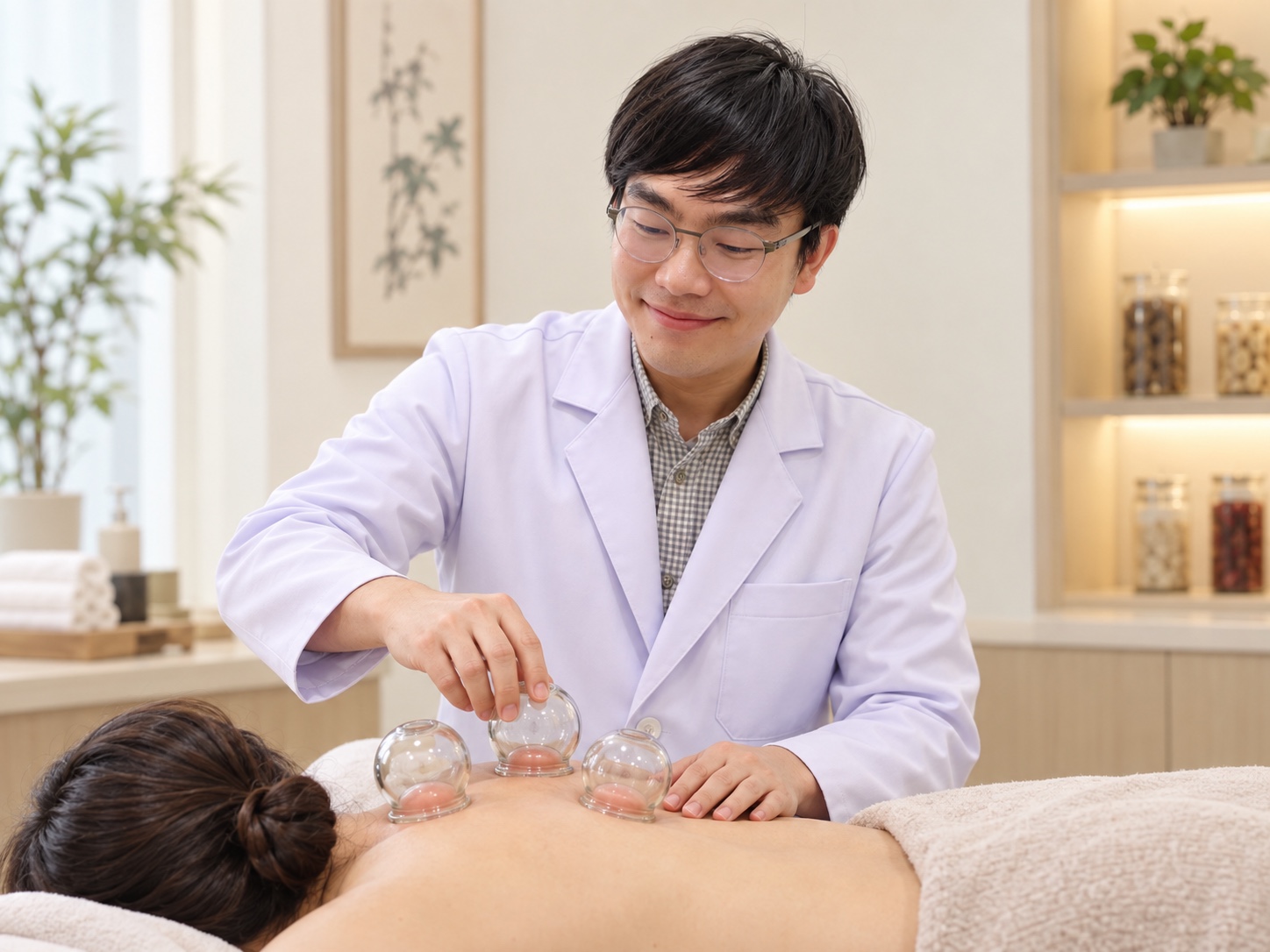
Care for muscle aches, tightness and fatigue, with every stage performed by a licensed traditional Chinese medicine practitioner. Technique, suction and timing are chosen for your symptoms and skin.
500 THB / session
Approximately 15–20 minutes
The same standard price applies at Chok Chai 4, Ramintra and Hat Yai. It includes the practitioner fee, cupping according to your care plan and infrared heat when appropriate.
What Can Cupping Help With?
Cupping applies suction to the skin and underlying tissues. It is used as part of care for aching or tense muscles and fatigue related to work or exercise. You may feel more relaxed and find movement more comfortable afterwards; responses differ.
The practitioner checks whether cupping is suitable before treatment. Research suggests possible pain relief, but the evidence is not strong enough to promise a particular result. Read the NCCIH information on cupping ↗
Three Techniques, Tailored to You
Flash Cupping
The cup is applied and released repeatedly. In TCM, this is used to encourage the movement of qi and blood near the skin and muscles, and may prepare an area for further treatment.
Moving Cupping
Oil is applied so the cup can move along tight muscle areas. In TCM, the aim is to encourage qi and blood to move along the meridians. Redness may follow the path of the cup.
Stationary Cupping
Cups remain at selected points. Zhen Fu Clinic’s standard retained-cup time is 5 minutes. This is one stage of treatment, rather than the total appointment time.
Our Approach at Zhen Fu Clinic
A licensed TCM practitioner assesses you and performs each stage: selecting areas, technique, suction and timing, then checking the skin afterwards. Assessment may include tongue and pulse examination where appropriate.
- Flash cupping around the affected area to prepare the skin and muscles.
- Moving cupping with oil along suitable muscle areas. On the back, the cup is moved along muscles beside the spine rather than directly over the spinal column.
- Stationary cupping at selected points, with the clinic’s standard retained time of 5 minutes and ongoing checks of your skin and comfort.
- Skin check and gentle manipulation after cup removal, when appropriate.
Not everyone needs the same locations, suction or combination of techniques. The clinic uses purpose-made cupping equipment and its established cleaning procedures.
Areas Your Practitioner May Consider
- Neck, shoulders and shoulder blades: muscle tightness associated with desk work, mobile use or long drives.
- Back and waist: muscles affected by prolonged sitting, standing or physical work.
- Abdomen: selected concerns such as abdominal tension or constipation may be considered within an individual TCM assessment.
- Thighs and calves: muscle fatigue or tightness from activity, walking or standing.
- Soles and heels: may be considered as part of care for plantar tightness, heel pain or plantar fasciitis after examination.
These are areas that may be considered in the clinic’s TCM approach, rather than a guarantee that cupping treats every cause of these symptoms. The practitioner assesses the painful area and skin before deciding.
Understanding Cupping Marks
Suction can leave red or darker marks. Their appearance depends on suction, time, location, skin and individual response, and they usually fade gradually.
Within TCM assessment: the clinic considers mark colour alongside symptoms, tongue and pulse. Light pink may be interpreted as relatively free circulation; red may occur in tense or tender areas; darker red or purple may be considered alongside patterns of qi and blood stagnation, blood stasis or cold.
Colour is one part of a TCM assessment. It cannot, by itself, diagnose a disease or measure its severity. Darker marks do not automatically mean a more serious illness.
Before Your Appointment
- Eat normally and wear comfortable clothing that allows access to the treatment area.
- Tell the practitioner about medicines, supplements, important medical conditions, pregnancy, bleeding problems and any skin concerns.
- Tell us if you have a fever or are acutely unwell.
- Confirm the appointment and practitioner with your branch before travelling.
Aftercare
- Drink normally. Excessive water intake to “flush out toxins” is unnecessary.
- Protect the treated skin. Avoid scratching, vigorous rubbing or irritating areas with marks.
- Bathing: the clinic generally advises waiting about 2–3 hours before bathing, especially avoiding very hot water immediately afterwards. This is the clinic’s aftercare advice to allow the skin to rest.
- If symptoms concern you: contact the clinic for severe pain, burning, blisters or other unusual symptoms.
Precautions
Tell your practitioner about wounds, skin infection, significant inflammation or irritation, easy bleeding, medicines affecting clotting, pregnancy, major medical conditions, fever or acute illness. The practitioner will decide whether to proceed, adjust or defer treatment.
During treatment, report strong pain, burning or discomfort immediately. Cupping can cause skin discoloration, burns, scars or infection, and can aggravate some skin conditions.
Severe unusual pain, weakness or numbness needs medical assessment. Do not use cupping to replace necessary diagnosis or emergency care.
Frequently Asked Questions
What is cupping used for?
It is used as part of care for muscle aches, tightness and fatigue related to work or exercise. Suitability and response vary.
Does cupping hurt?
You may feel suction or skin tightness. Tell the practitioner immediately if you feel strong pain, burning or discomfort so the technique can be adjusted.
How long do the marks last?
Red or darker marks usually fade gradually. The time depends on your skin, suction and individual response.
How long does treatment take?
A session is approximately 15–20 minutes. The retained-cup stage has a clinic standard of 5 minutes; the overall session also includes other steps.
How much does cupping cost?
THB 500 per session at all three branches, including the practitioner fee, the planned cupping procedure and infrared heat when appropriate.
Can cupping be combined with acupuncture?
The practitioner may recommend both if suitable for your symptoms and care goals. Confirm the combined treatment and total cost before proceeding.
Related Service
Explore acupuncture if your practitioner considers it appropriate as part of your individual care plan.
Acupuncture → · View Treatment Fees →Choose Your Branch
Confirm the practitioner, appointment time and total cost with your branch before travelling.
Chok Chai 4
062-596-6955
Ramintra
02-038-9955
Hat Yai
074-882-083
This page offers general information to help plan your visit; it is not an individual diagnosis.
Based on the clinic’s Thai service information · Read the Thai original